
90-Day Rehab Programs
TABLE OF CONTENTS

The Basics of 90-Day Rehabs
To understand if 90-day rehab is right for you, it’s important to understand the basics of 90-day treatment, the difference between 90-day and other treatment lengths, and the rehabilitation process in general.
The Rehabilitation Process
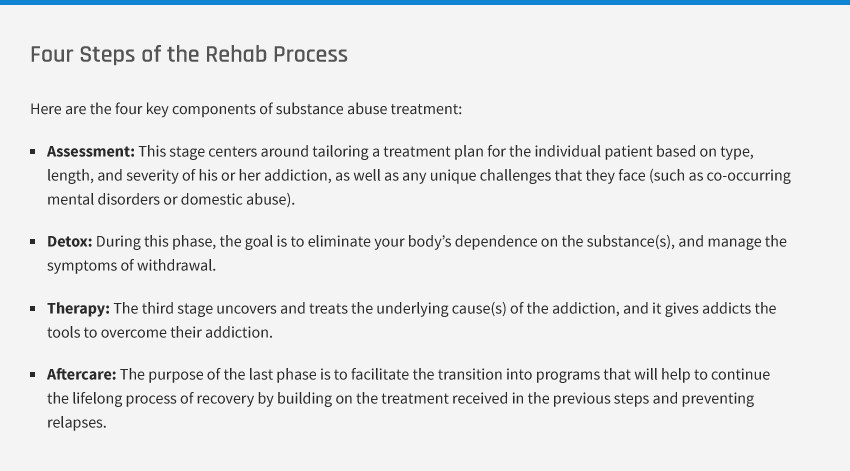
Rehabs of any length follow the same basic steps, which you learn about in depth in our guide to the rehabilitation process. Those steps are:
Types of 90-Day Rehab Programs
Rehab programs provide different treatments to patients based on the level and type of addiction, as well as the needs of the patient. Most rehabs offer both evidence-based medical and behavioral therapies to address the physical and psychological aspects of the addiction. They include:
- Detox services
- Cognitive Behavioral Therapy
- Contingency Management Interventions
- Community Reinforcement Therapy
- Motivational Enhancement Therapy
- The Matrix Model
- 12-Step Facilitation Therapy
- Family Behavior Therapy
- Medication-Assisted Therapy
- Individual and Group Counseling
For more information on the various types of therapy, read our guide on The Addiction Rehabilitation Process
90-day rehab programs that offer these types of behavioral and medical therapy are offered in two different service settings: inpatient residential treatment and outpatient intensive day treatment.
Inpatient residential treatment provides a sober environment and medical care 24 hours a day
The most common type of 90-day program is inpatient residential treatment. During the program, patients live at the facility and receive intensive treatment 24 hours per day from experienced professionals. Patients experience the typical steps of detox and rehabilitation, therapy, engage in both group and individual therapy, transition to a sober lifestyle, and form an aftercare plan to prevent future relapses.
According to the SAMHSA, long-term inpatient treatments (any treatment longer than 30 days) account for 7% of all rehab admissions nationwide.
Outpatient intensive day treatment offers more schedule flexibility and the same therapy options as full-time residential treatment
This type of treatment offers more flexibility and a reduced cost, while providing the same therapy options as full-time residential treatment. However, the lack of a sober living environment that inpatient care offers can be a pitfall for those with severe addictions.
Typically, outpatient intensive day treatment patients check in for 2 to 4 hours a day, 3 days a week, though each facility and your circumstance may require more time in therapy. In addition to 90-day programs, these treatments can be extended to four or more months and often transitions into less intensive treatment or aftercare upon completion.
90-Day Treatment Options
| Short-Term Residential | Outpatient Intensive Day Treatment | |
| Definition | Intensive treatment in a non-hospital setting, most often a therapeutic community with other patients. | Patients receive the extensive services of an inpatient program but return home after. After completion, patients often transition to less intensive counseling. |
| Therapies Offered |
|
|
| Days Per Week | 7 | 3 |
| Hours Per Day | 24 | 2-4 |
How Are 90-Day Rehab Programs Different Than Others?
Programs that are a minimum of 90 days have been found to be the most successful in rehabilitation. All of the therapy options offered in 90-day treatment are the same offered at 30 and 60-day options, but leaves more time for the patient to stay in a positive sober environment and recondition their lives to living without the substance.
The main difference between the rehab lengths is what the care will focus on. 30-day treatments concentrate mostly on detoxing and treating the immediate symptoms of the addiction, while 90-day and longer treatments have the time to both properly detox and encourage permanent lifestyle changes, including promoting dietary changes and daily exercise to naturally improve mood and avoid a backslide. 60-day treatment offers some of the upsides of both options, but it doesn’t have the same record of success as 90-day programs.
Are 90-Day Rehab Programs Right for You?
Benefits of 90-Day Rehab Treatment
- 90 day rehabs have been shown to have the best outcomes. NIDA studies have found that patients who enroll in treatments for at least 90 days have a higher rehabilitation success rate.
- There’s plenty of time to focus on what comes after rehab. Aftercare is critical to a successful recovery. 90-day treatment programs offer the patient time to not only detox from the substance, but also to plan how to best continue the good work that’s been accomplished in rehab.
- 90-day rehab is best for those with moderate to severe addictions or for those who have relapsed. Long-standing addictions often require prolonged psychotherapy to address the root issues behind the addiction. Additionally, those who have relapsed or fear they may relapse have time to work on avoiding a backslide while remaining in a safe environment, or in the case of those who choose outpatient, remaining accountable to a scheduled rehab program.
Drawbacks of 90-Day Rehab Treatment
- It requires a significant devotion of time. Three months is a lot of time so those who choose any 90-day treatment must have the dedication to achieve rehabilitation and the will to see it through.
- 90-day treatment is more expensive. The overall cost of rehab continues to add up the longer you stay in rehab. Three months of rehab costs significantly more than shorter programs such as programs lasting 30 or 60 days.
- 90-day treatment may not be fully covered by insurance. While insurance policies often cover 30-day treatments, anything longer than that is less likely to be covered by the average insurer, especially with inpatient programs. If you’re considering enrolling in a 90-day treatment program and believe finances may be an issue after the first 30 days, check with the rehab facility to see what type of payment assistance they offer.
Who Should Enroll in 90-Day Rehab Programs?
Every person and their situation requires a unique approach to rehabilitation. To decide if 90-day treatment is the best option for you. receive a full assessment by a trained medical or psychological professional. Generally speaking, 90-day treatment is best for those who have moderate to severe addiction levels and feel they need an extended time to adjust to life after rehabilitation.
Choosing the Appropriate Rehab Length
| 30-day | 60-day | 90-day | 120-day | |
| Best for severe addictions | ✕ | ✕ | ✓ | ✓ |
| Best for mild addictions | ✓ | ✓ | ✕ | ✕ |
| Best for people with limited time off from work | ✓ | ✕ | ✕ | ✕ |
| Best for people with unbreakable personal obligations (i.e. child care) | ✓ | ✕ | ✕ | ✕ |
| Best for people with limited finances | ✓ | ✕ | ✕ | ✕ |
| Covered by most insurance | ✓ | ✕ | ✕ | ✕ |
How to Choose a 90-Day Rehab Program
Choosing a program requires a careful review of every available facility, looking at things like quality of staff, available treatments, cost, and location.
What to Consider Before Choosing a Program
Here are some of the most important factors to consider:
- Evidence-Based Treatment Options: It’s important that the facility you choose utilizes extensively-researched treatments that have been shown to be effective in fighting addiction. These evidenced-based therapies represent your best chance at maintaining abstinence after your 30-day stay. Also, every person responds differently to treatment, so a clinic that offers the most treatment options is more likely to have one to fit your needs.
- Staff Credentials: You shouldn’t expect all of the staff at a rehab facility to be medical professionals, but because of the physical symptoms and possible health risks associated with substance withdrawal, a quality center should have at least one licensed medical practitioner on-hand. Likewise, a significant portion of rehab is dedicated to counseling, so it’s also important that the facility employs well-trained counselors and a licensed psychologist or credentialed mental health professional. Not only do credentials make a facility more credible, but they are also often critical to insurance companies covering treatment costs.
- Arranged Aftercare and Support Systems: Patients who enroll in aftercare programs are more likely to maintain abstinence than those who don’t. Aftercare programs include ongoing counseling, 12-step meetings, and sober living homes. The best rehab facilities will arrange aftercare for their patients before completing treatment (either at the same facility or through an affiliated program) to help ensure their success.
For more information, read our full guide, “Choosing the Right Rehab”
Which Service Setting is Best?
The best rehab for you depends on your level of addiction
While inpatient treatment is almost always inconvenient, if an assessment of your history with addiction and your current living environment determines that inpatient is the best option for you, it’s wise to make the necessary sacrifices to follow through with your counselor’s recommendation.
For those who have a supportive, sober environment to return to, outpatient intensive day may be a great option. It allows for consistent, long-term treatment with a much reduced cost and weekly time commitment.
For more help on deciding which service setting is best for you and what’s involved with each, read our guides on inpatient rehabs and outpatient rehabs
How Much Do 90-Day Rehab Programs Cost?
The cost of treatment varies by facility, especially among residential programs. In addition to professional treatment, the price of residential rehab also includes room and board, food, and amenities. Therefore, factors like location, the level of luxury, and treatment services offered can increase the cost.
The average cost of 90-day inpatient rehab is between $15,000 and $60,000
The cost of rehab is generally between $15,000 and $60,000 for 90 days of treatment. Your actual out-of-pocket expense will depend greatly on what type of insurance you have (or if you have it at all), whether you qualify for payment assistance, or if you are able to secure a rehab scholarship.
The average cost of 90-day outpatient rehab is between $3,000 and $9,000
Since outpatient programs don’t include the cost of room and board, they tend to be a lot more affordable. Additionally, insurance companies are more likely to cover outpatient programs.
How to Find a 90-Day Rehab Facility
Click your state from the list below, then input your zip code to find rehabs near you
To find a 90-day rehab facility in your area, use our searchable directory that includes thousands of treatment centers nationwide. Click your state from the list below, and input your zip code or address in the directory tool on your state’s page.
Our treatment finder tool offers many filters to help you narrow your search down to the perfect facility. To find 90-day residential programs, simply apply the “Long-Term Residential” filter under the category ‘Service Settings.” To find outpatient intensive day treatment, apply the “Intensive Outpatient Treatment” filter.
- Alabama
- Alaska
- Arizona
- Arkansas
- California
- Colorado
- Connecticut
- Delaware
- District of Columbia
- Florida
- Georgia
- Hawaii
- Idaho
- Illinois
- Indiana
- Iowa
- Kansas
- Kentucky
- Louisiana
- Maine
- Maryland
- Massachusetts
- Michigan
- Minnesota
- Mississippi
- Missouri
- Montana
- Nebraska
- Nevada
- New Hampshire
- New Jersey
- New Mexico
- New York State
- North Carolina
- North Dakota
- Ohio
- Oklahoma
- Oregon
- Pennsylvania
- Rhode Island
- South Carolina
- South Dakota
- Tennessee
- Texas
- Utah
- Vermont
- Virginia
- Washington
- West Virginia
- Wisconsin
- Wyoming
What Happens After a 90-Day Rehab Program?
The end of the rehab program isn’t the end of addiction recovery. Studies show that aftercare is one of the most important steps to a successful rehabilitation and helps prevent a relapse.
Patients may be encouraged to transition to outpatient treatments after a 90-day program
For some, recovery may take longer than expected. For patients who need more than 90 days to fully recover from addiction, transitioning into an outpatient aftercare program can be the difference between a successful rehabilitation and a relapse. Most treatment facilities will work with the patient to arrange an aftercare program that works best for the patient. Common aftercare options include:
- Sober Living Facilities
- Follow-up Counseling
- Alcoholics/Narcotics Anonymous
- Non-12-Step Support Groups
Take Action
If you’ve decided that a 90-day rehab program is the best option for you, use our directory (above) to find a treatment facility. If you’re suffering from an addiction, get started with your search today.
Explore alternate treatment options
If you’ve decided that a 90-day program is not appropriate for your situation, we can help you choose which program is. For more information on long-term rehab options, read our guide to 60-Day Rehab Programs. If you believe your addiction would be best treated in a short-term treatment program, check out our guide to 30-Day Rehab Programs.
Disclaimer: The information contained on Help.org is for informational and educational purposes only and should not be relied upon for any medical or diagnostic purpose. The information on Help.org should not be used for the treatment of any condition or symptom. None of the material or information provided on Help.org is not intended to serve as a substitute for consultation, diagnosis, and/or treatment from a qualified healthcare provider.